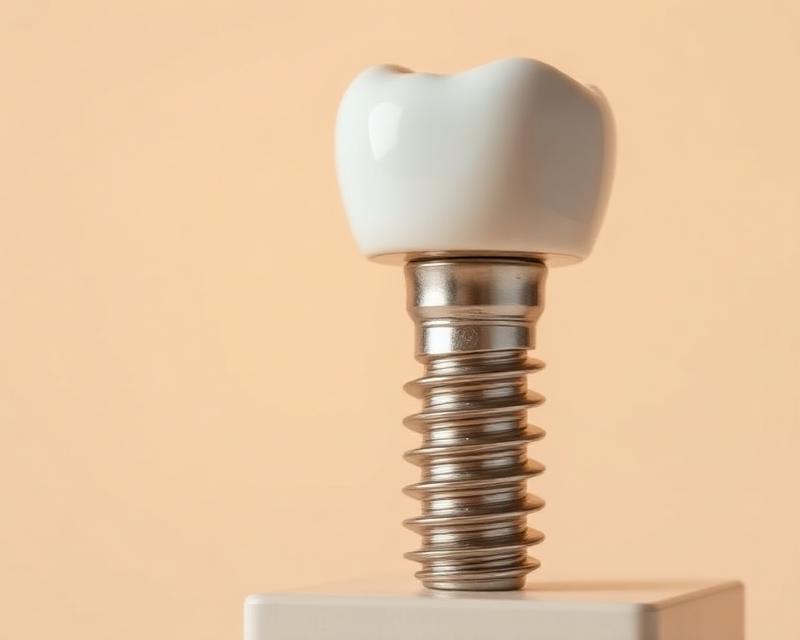
A dental implant is the closest thing modern dentistry has to a real replacement for a missing tooth. A small titanium post is placed into the bone where the root used to be; over a few months it integrates with the bone (osseointegration) into a stable foundation; then we place a crown on top that looks and functions like a natural tooth. The result, when planned and placed well, is a tooth replacement that you stop thinking about — you brush it, you floss it, and life goes on.
We do single implants, multiple implants, implant-supported bridges, and full-arch restorations. Most cases — consultation, placement, and the final restoration — are completed in our office. You do not get handed off to four different practices to finish one tooth.
Why replace a missing tooth at all
If you lose a tooth and do nothing, three things happen over the years. The teeth on either side of the gap drift toward it. The opposing tooth (above or below) drifts down or up because nothing is biting against it. And the bone in the empty area shrinks, because the bone that supported the tooth no longer has a tooth to support and gradually resorbs.
Replacing the tooth — with an implant, a bridge, or a partial denture — prevents that cascade. Of the three options, implants are the only ones that preserve the bone the same way a natural tooth root does. They also do not require modifying the neighboring teeth (a bridge does) and do not move (a partial denture does).
Single-tooth implants
The most common case. A tooth has been lost — to decay, fracture, gum disease, or trauma — and the patient wants it replaced without modifying the neighboring teeth. We evaluate the bone (with a 3D scan when needed), place the implant in a short surgical visit under local anesthesia, and let it heal for three to four months while the bone integrates with the titanium surface.
Once integration is confirmed, we attach an abutment and place a custom crown. The total time from extraction to final crown is usually four to six months. For some patients with adequate bone and a tooth that has just been extracted, we can place an immediate implant at the time of extraction, shortening the timeline.
Multiple implants and implant-supported bridges
When two or more adjacent teeth are missing, we often place two implants and connect them with an implant-supported bridge — three or four teeth total, supported by two roots. This is more conservative than placing an individual implant for every missing tooth and provides excellent function.
For patients who have lost most or all of the teeth in an arch, full-arch implant restorations (often called All-on-4 or All-on-6) replace a full upper or lower set of teeth on as few as four to six implants. This is a transformative procedure for patients who have struggled with loose dentures for years.
Full-arch restoration
Full-arch implant restoration is the modern answer to dentures that move when you chew, that you have to take out at night, that change the shape of your face. Four to six implants are placed in a single arch, a fixed bridge of teeth is attached, and you leave with teeth that stay in your mouth.
These are bigger cases. They require careful planning, a 3D scan, and sometimes coordination with a specialist for the surgical placement. The final restoration is done in our office. Patients who have completed full-arch implant restorations almost universally describe it as the single best dental decision they have ever made.
Bone grafting and when it is needed
If a tooth has been missing for years, the bone in that area has often shrunk to the point that a standard implant placement is not straightforward. In those cases we sometimes do a bone graft — adding processed bone material that integrates over a few months and creates the foundation for an implant.
Not every implant case needs a graft. We will tell you, from the 3D scan, whether your case needs grafting and what that adds to the timeline and cost. We do not graft on speculation.
Who is a good candidate
Most adults with reasonable general health and adequate bone are candidates for dental implants. Diabetes (well-controlled), smoking, certain medications (especially bisphosphonates for osteoporosis), and active gum disease are all factors we evaluate carefully — they do not automatically disqualify, but they affect planning and prognosis.
Active gum disease needs to be treated before an implant is placed. The same bacteria that destroy bone around natural teeth can destroy bone around an implant — a condition called peri-implantitis. We will not place an implant into an unhealthy mouth.
What recovery is like
Most patients are surprised by how comfortable implant placement is. The procedure itself is done with local anesthesia, sometimes with mild oral sedation if the patient prefers. After the placement, mild swelling and soreness for two to four days is normal, well-managed with over-the-counter pain relievers. Most patients are back to normal activities within a day or two.
Once integrated, implants are not maintenance-free — they need the same brushing, flossing, and six-month cleanings as natural teeth, with attention to the gum tissue around the implant. Done right, implants regularly serve patients for twenty, thirty, or more years.
Cost, insurance, and financing
Implants are a significant investment — usually a few thousand dollars per single tooth, depending on whether bone grafting is needed and which crown material is used. Insurance coverage varies widely; some plans cover the crown but not the implant itself, others cover a portion of both, many cover none of it. We verify benefits and give you a written quote before any work begins.
CareCredit financing is available for cases that are too large to pay out of pocket. For complex full-arch cases, we often phase the work over months or years to spread the cost.
Frequently asked
Questions patients ask us
- How long does the whole implant process take?
- For a single tooth, four to six months from start to finish — most of which is healing time, not chair time. Immediate implants placed at the time of extraction can shorten the timeline. Full-arch cases often take six to twelve months.
- Are implants painful?
- The placement itself, with proper anesthesia, is more uncomfortable in anticipation than in reality. Most patients describe the recovery as easier than expected — comparable to a routine extraction.
- How long do dental implants last?
- With good oral hygiene and routine cleanings, a successful implant commonly serves twenty to thirty years or more. Long-term success depends on healthy gums around the implant — the same care natural teeth need.
- Can implants fail?
- Yes, occasionally — most often early (failure to integrate) or late (peri-implantitis from poor gum health). Modern implant success rates are above 95 percent for healthy patients with adequate bone. We will tell you honestly what your specific risk factors are.
Schedule
Have a question, or ready to be seen?
Call us at (562) 699-3838 or request an appointment online.